Photo Album

Tuesday, June 28, 2011

New technique yields troves of information from nanoscale bone samples

Just for illustration purposes

New analysis techniques of bone tissue have been developed at Rensselaer Polytechnic Institute.

What I gather of this technique, because it is a bit complex, is that researches can get information for tiny tiny pieces of bone samples. Which as you can imagine gives a whole new insight into research and "the fight against osteoporosis" (source) . Not to mention how it can help archeology!
"We're able to take very small, nanoscale-sized bone samples, and determine the protein signatures of the bone," said Deepak Vashishth, head of the Department of Biomedical Engineering at Rensselaer, who led the study. "This is a relatively quick, easy way for us to determine the history of the bone – how and when it formed – as well as the quality of the bone, and its likelihood to fracture." (source)
The study may be viewed online at: http://bit.ly/lAfSfI.

For more information on Vashishth and his research at Rensselaer, visit:
Faculty Home Page
http://www.eng.rpi.edu/soe/index.php/faculty/154?soeid=vashid
Proteins To Yield New Clues in Fight Against Osteoporosis
http://news.rpi.edu/update.do?artcenterkey=2771
Rensselaer Names Vashishth New Head of Biomedical Engineering
http://news.rpi.edu/update.do?artcenterkey=2663
Rensselaer Department of Biomedical Engineering
http://www.bme.rpi.edu/

Visit the Rensselaer research and discovery blog:
http://approach.rpi.edu
Follow us on Twitter:
www.twitter.com/RPInews

Source: New technique yields troves of information from nanoscale bone samples

Monday, June 27, 2011

An interesting Site

Thanks to my friend Karin I found this intereting looking site:

http://calintec.com/Home_Page.html

Might not look like much but it has a seciton on Museum convservation:

http://calintec.com/Museum_Conservation.html

And a fascinating article on Artifact Cleaning:

http://www.calintec.com/uploads/artifact_cleaning.pdf

Tuesday, June 21, 2011

Arrow origins traced to Africa

"The invention of the bow and arrow used to be closely linked to the late Upper Paleolithic (Stone Age) in Europe," less than 30,000 years ago, says anthropologist Marlize Lombard of South Africa's University of Johannesburg, in a study in the current Journal of Archaeological Science." Source

"Last year, however, Lombard and her colleagues reported in the journal Antiquity, that arrows were around at least 64,000 years ago, and were first discovered not in Europe, but in South Africa. A single quartz arrowhead, bloodstained, had turned up at the Sibudu Cave site, dating to that time. In the new Journalof Archaeological Science study, Lombard reports more arrowheads and more evidence pushing back the age of the bow and arrow." Source
Read more on it here: Arrow origins traced to Africa - USATODAY.com

Now after reading this fascinating article, I wanted to know a bit more about how Arrowheads were made:

I found these great videos:


I also found this video that shows what some of them look like:


Hope you found this as fascinating as I did!

Monday, June 20, 2011

Some Archaeology Quotes

Archaeology is the peeping Tom of the sciences. It is the sandbox of men who care not where they are going; they merely want to know where everyone else has been.
Jim Bishop

For me archaeology is not a source of illustrations for written texts, but an independent source of historical information, with no less value and importance, sometimes more importance, that the written sources.
Michael I. Rostovtzeff

It's very important to reveal the mystery of the pyramid. Science in archaeology is very important. People all over the world are waiting to solve this mystery.
Zahi Hawass

Wednesday, June 15, 2011

Way Back Wednesday

Today I'll be looking at: Hammurabi Stele


 Material - Polished Black Diorite Pillar
Old Babylonian
Approx Date: 1790 BC
Height: 2.26 m (88.976378 inches)
Width: 2 feet
Depth: 1.5 feet
Text: Cuneiform
Babylon, Iraq
Excavated in ancient Susa (Shushan) by French Archaeologists 1901-1902
Location: Louvre Museum, France


 Detail of the top of the Hammurabi Stele:
Picturing King Hammurabi coming before the god Shamash


Did you know?

Hammurabi was the sixth king of Babylon and ruled from 1792 BC to 1750 BC. But what is most fascinating was his laws - Hammurabi's Law Codes. It was the first written codes of law in recorded history.

I wrote a few exams about these law codes and they are fascinating!!

Hope you enjoyed my Way Back Wednesday!

* All photo's taken by me at the Archeology Museum in Iran 2009 - This is a replica.

Tuesday, June 14, 2011

Japanese porcelain found in Cebu excavation.


The Article:
"A Japanese archaeologist confirmed the existence of 17th- to 19th-century Japanese ceramics in Boljoon town, southern Cebu, the first intact artifacts found in the country.

Dr. Takenory Nogami, a Japanese researcher from the Arita Museum of History, expressed excitement over the discovery of a large dish and a jarlet “emariware” or Japanese porcelain.

“The recovered pieces in Boljoon are unique because it is still intact in the aquare,” Nogami told reporters in the Museo sa Sugbo last Saturday.

The pieces were discovered in 2009 through an excavation project of the Sumitomo Foundation-funded Boljoon Archaeological Project conducted by the University of San Carlos (USC) with the National Museum of the Philippines."
Source: Japanese porcelain found in Cebu excavation

Read more about it:
http://cebudailynews.wordpress.com/2011/05/30/ancient-japanese-pottery-in-boljoon-town/
http://newsinfo.inquirer.net/10434/ancient-japanese-pottery-in-boljoon-town

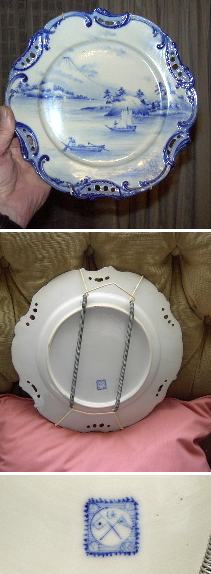
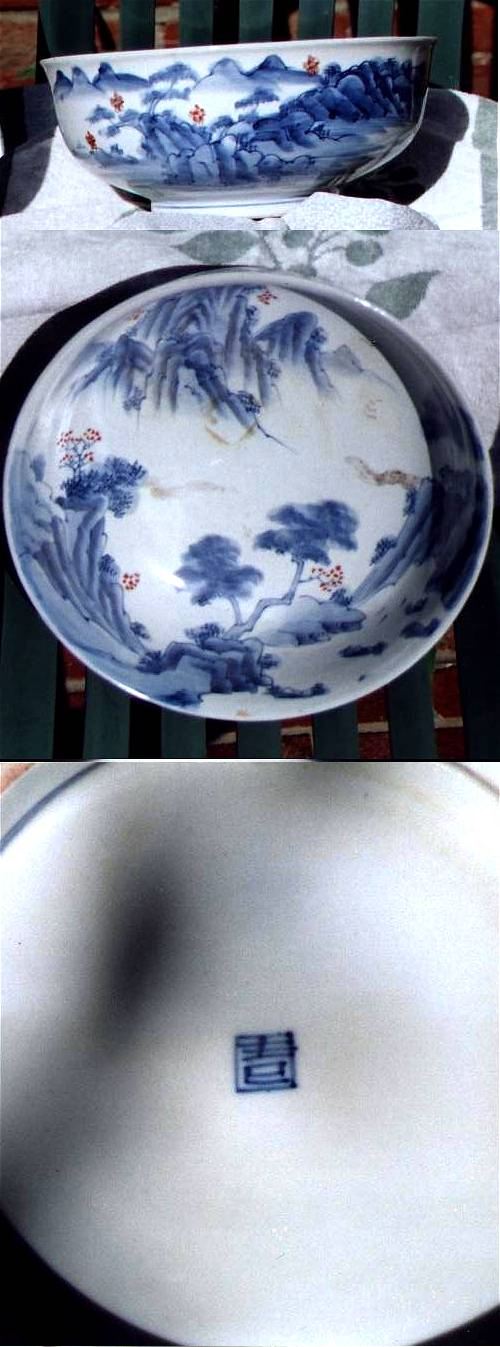
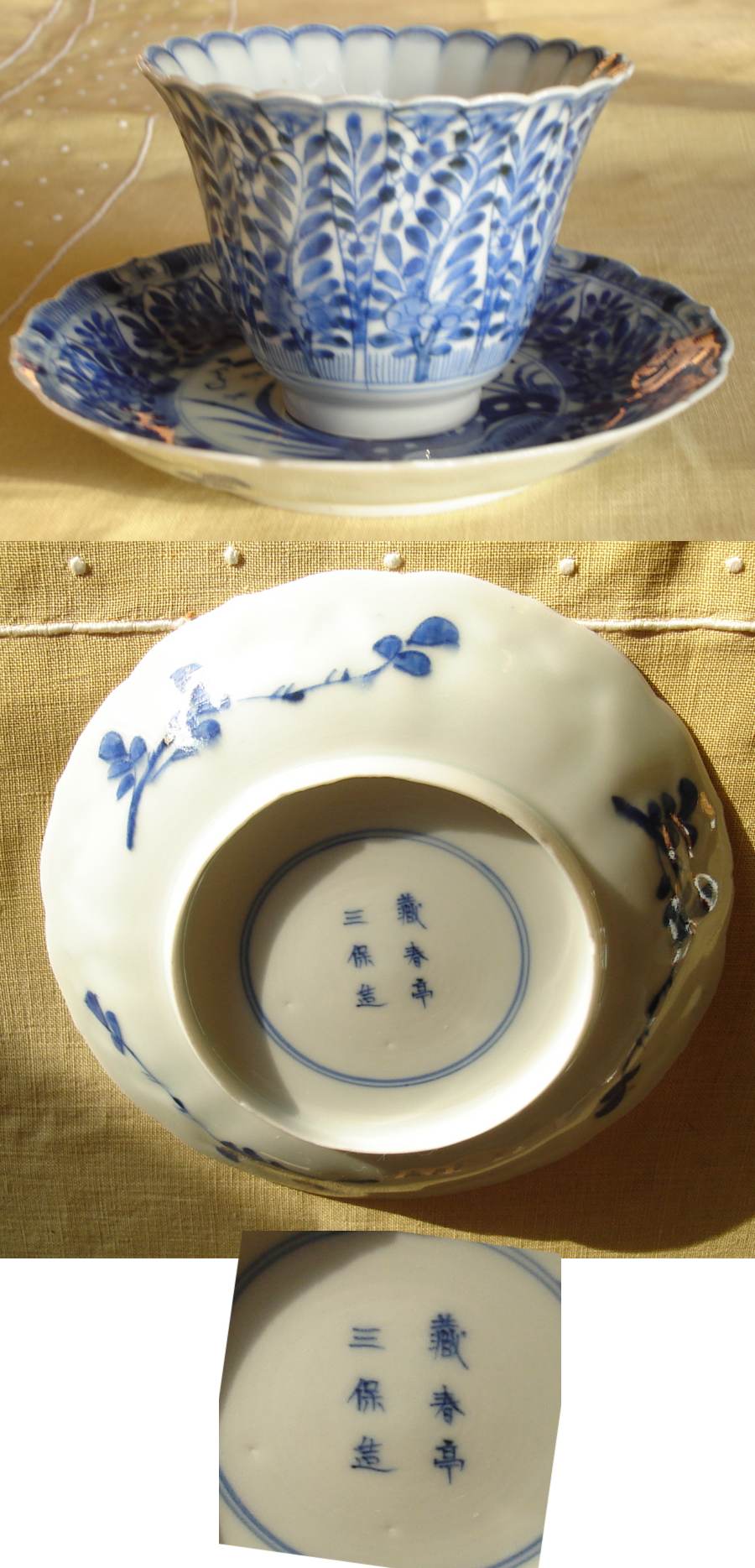
After reading this article I was curios to see what exactly Japanese porcelain looks like, and this is what I found:


I then discovered a brilliant site about Japanese Porcelain marks over here:
Click Here

I found some great information and pictures:


"Mark: Crossed Imperial Chinese and Japanese flags with the Turkish crescent moon and star in-betwen, refering to Mr AA Vantines business relations with these three countries. Tentative date: c. 1910-20's."


"Mark: Mark: Aoki, unknown meaning possible a family name. Porcelain made at Arita kiln. Bowl. Diameter 12", height 5"."


"Tea cup and dish with underglaze blue and white decoration in imitation of Chinese Kangxi period (1662-1722) porcelain. Mark: "Zoshuntei Sanpo Zu "Zoshun (shop) Sanpo Made (made by Sanpo). Good quality, mid 19th century, Japanese export ware. Mid 19th century."

I wouldn't mind a Tea Cup like that!

There are tons more on the website.

I can see myself looking for Japanese Porcelain Marks whenever I'm at a Flea Market!

Saturday, June 11, 2011

Did Early Americans help colonise Easter Island?


It would seem the answer is yes. New genetic evidence has proved this disputed theory correct. Well parts of it.

We know that Polynesia was colonised from Asia as there is tons of evidence for this but Thor Heyerdahl had another theory. He saw similarities in the famous statues of Easter Island to those from South America. He also sailed a wood raft from Peru to the Tuamotu islands of French Polynesia to show that it was possible.


Erik Thorsby (from the University of Oslo) has found evidence to support some of Heyerdahl's theory. He did this by collecting "blood samples from Easter Islanders whose ancestors had not interbred with Europeans and other visitors to the island" (source). And some of these tests showed that Easter Islanders carried HLA genes that was "only previously found in Native American populations" (source).

For more genetic information on this study, click here.

Fascinating research!

Fun facts:

* Easter Island has a very rich collection of Petroglyphs.


Source

* Jacob Roggeveen found (first recorded visitor) the Island on Easter Sunday 1722 and thus gave the name Paasch-Eyland meaning Easter Island.

Sources:
http://www.newscientist.com/article/dn20546-early-americans-helped-colonise-easter-island.html?DCMP=OTC-rss&nsref=online-news
http://www.ablogabouthistory.com/2011/06/07/early-americans-colonized-easter-island/
http://www.absoluteastronomy.com/topics/Easter_Island